Golden Teacher Mushrooms Provide Unique Insights into Psilocybin Chemistry and Effects
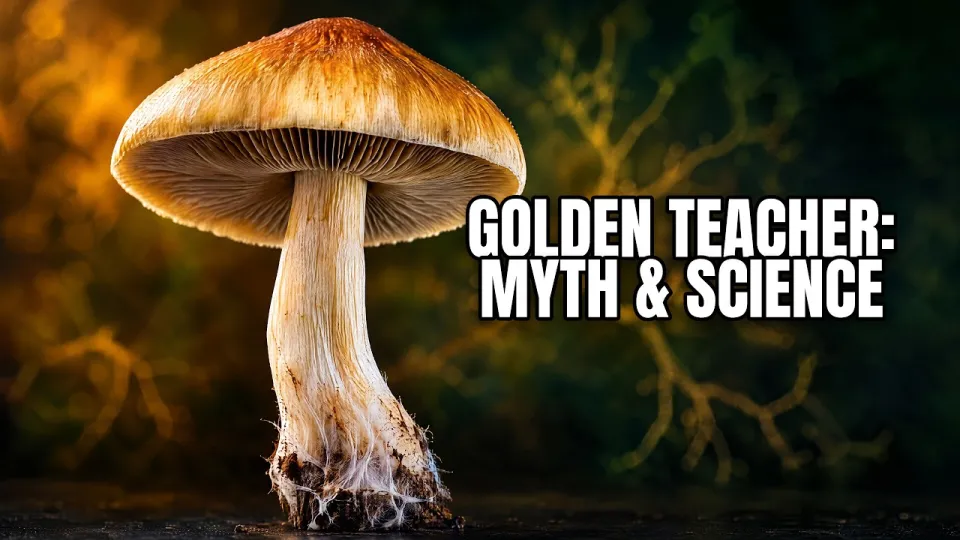
Video: Golden Teacher Mushrooms: Myth, Chemistry & What Science Knows
· based on the channel Shroomverse
Key takeaways
- Golden Teacher is a popular psilocybin mushroom variety with uncertain taxonomy.
- Psilocybin and psilocin are the main active compounds affecting serotonin receptors.
- Blue bruising in these mushrooms indicates psilocin oxidation but not potency.
- Brain imaging shows psilocybin alters neural networks linked to self-perception.
- Clinical trials use standardized psilocybin, not whole mushrooms, for therapy.
Golden Teacher mushrooms are a well-known strain of psilocybin-containing psychedelic mushrooms valued for their distinctive golden caps and reputed insightful effects. Despite their popularity among psychonauts and mycology enthusiasts, the exact taxonomy and chemical consistency of Golden Teacher mushrooms remain uncertain. They belong to the genus Psilocybe, primarily linked to Psilocybe cubensis, but community naming varies widely without strict scientific classification.
The Origin and Meaning of Golden Teacher Mushrooms
The name "Golden Teacher" refers to the mushroom's characteristic golden-yellow cap and its reputed ability to facilitate spiritual or insightful experiences, often described as "teaching" users about themselves or the universe. However, this label is more a cultural or community designation than a formal taxonomic classification. The strain likely emerged from cultivated lineages popularized in the psychedelic mushroom community in the late 20th century. Its origins are not precisely documented, and genetic studies show variability even within samples labeled as Golden Teacher.
Chemical Composition and Psilocybin Effects
Golden Teacher mushrooms contain the psychoactive compounds psilocybin and psilocin, which interact primarily with serotonin 5-HT2A receptors in the brain. Psilocybin is metabolized into psilocin, the active molecule responsible for psychedelic effects such as altered perception, mood changes, and cognitive shifts. These compounds' concentrations can vary between different mushroom samples due to growing conditions, genetics, and harvesting methods.
Brain imaging studies of psilocybin administration reveal that it disrupts default mode network connectivity, a brain network associated with self-referential thought and the sense of ego. This disruption can lead to experiences of ego dissolution, increased creativity, and altered consciousness often reported by users. However, clinical research typically uses purified psilocybin under controlled conditions rather than whole mushrooms, complicating direct comparisons.
Blue Bruising Phenomenon and Its Significance
One well-known feature of Golden Teacher and other psilocybin mushrooms is blue bruising, where damaged areas of the mushroom flesh turn blue or greenish. This occurs due to the oxidation of psilocin when exposed to oxygen after cell damage. While blue bruising is often seen as a sign of potency or active compounds, scientific evidence shows it is not a reliable indicator of psilocybin concentration or strength. It merely reflects chemical reactions occurring on the mushroom surface.
Variability Among Golden Teacher Mushrooms
Despite the consistent name, Golden Teacher mushrooms do not guarantee uniform chemical profiles or subjective effects. Factors such as strain lineage, substrate used for cultivation, environmental conditions, and harvest time all influence psilocybin and psilocin levels. Therefore, two samples marketed as Golden Teacher may produce different experiences. This variability highlights the challenges in standardizing mushroom-based psychedelic experiences and the importance of clinical-grade compounds in research.
Psilocybin Research and Clinical Applications
Current clinical trials investigating psilocybin focus on purified, pharmaceutical-grade compounds administered in controlled therapeutic settings with psychological support. These studies show promise for treating depression, anxiety, PTSD, and addiction. However, the research does not directly extrapolate to whole mushroom use, including Golden Teacher mushrooms, due to chemical variability and unknown dosing. Understanding the precise chemistry and effects of specific mushroom strains remains an area of ongoing research.
Myths Versus Scientific Evidence
Several myths surround Golden Teacher mushrooms, including fixed effects based on the name, blue bruising indicating stronger potency, or consistent spiritual insights guaranteed by this strain. Science clarifies that experience depends on numerous factors — chemical content, individual brain chemistry, set and setting, and expectation. While Golden Teacher mushrooms are culturally significant and widely used, their biological and chemical characteristics are not fixed nor guaranteed.
Conclusion
Golden Teacher mushrooms offer a fascinating case of how cultural naming and biological science intersect in psychedelic mycology. Their distinctive appearance and reputation have made them iconic, but scientific evidence reveals variability in chemistry and effects. Psilocybin research continues to advance our understanding of psychedelic compounds, mostly through standardized clinical trials rather than whole mushrooms. The Shroomverse channel provides a valuable educational resource clarifying myths and presenting current scientific knowledge about Golden Teacher mushrooms and their place in psychedelic science.
Source: Golden Teacher Mushrooms: Myth, Chemistry & What Science Knows · Markdown version
Questions & answers
What are Golden Teacher mushrooms?
Golden Teacher mushrooms are a popular strain of psilocybin-containing psychedelic mushrooms known for their golden caps and reputed insightful effects. They are part of the *Psilocybe cubensis* species complex but lack precise scientific taxonomy.
Does blue bruising mean Golden Teacher mushrooms are more potent?
Blue bruising occurs when psilocin oxidizes after the mushroom tissue is damaged. While common in psilocybin mushrooms, blue bruising is not a reliable indicator of potency or psilocybin content.
How does psilocybin in Golden Teacher mushrooms affect the brain?
Psilocybin is converted into psilocin, which interacts with serotonin receptors, especially 5-HT2A, altering brain network connectivity linked to self-perception and consciousness, often producing psychedelic experiences.
Are clinical trials conducted using Golden Teacher mushrooms?
Clinical trials typically use purified, standardized psilocybin rather than whole mushrooms like Golden Teacher. This ensures consistent dosing and safety, which is difficult to guarantee with natural mushroom products.